Beyond the Screen: Component-Level ViewModels in Compose

Until Lifecycle 2.11, ViewModelStore scoping was tied to navigation destinations, activities, or fragments. There was no clean way to scope a ViewModel to an arbitrary part of your UI. The Lifecycle 2.11 alphas close that gap with two new APIs that let you scope ViewModels to UI sections smaller than a screen:
rememberViewModelStoreOwner()scopes aViewModelto the call site of a composable. The owner (and its VMs) is cleared when the composable leaves composition.ViewModelStoreProvider, used withrememberViewModelStoreOwner(provider, key), hoists ownership above the consuming composable so child VMs can outlive their composables.
The Example
The example we’ll use here is a feed of posts rendered in a LazyColumn. Each row shows an avatar, an author, body text with a Show more affordance, and a row of actions (favorite, comment, bookmark, share).
1
2
3
4
5
6
7
8
9
10
11
12
13
14
15
16
class HomeViewModel : ViewModel() {
    private val _posts = MutableStateFlow<List<Post>>(emptyList())
    val posts: StateFlow<List<Post>> = _posts.asStateFlow()

    fun toggleFavorite(post: Post) {
        _posts.value = _posts.value.map {
            if (it.id == post.id) it.copy(isFavorite = !it.isFavorite) else it
        }
        viewModelScope.launch {
            // simulate API call
            delay(2.seconds)
        }
    }

    fun toggleBookmark(post: Post) { /* optimistic, rollback on failure */ }
}
And the screen passes callbacks down through the list:
1
2
3
4
5
6
7
8
9
10
11
12
13
@Composable
fun HomeScreen(viewModel: HomeViewModel = viewModel()) {
    val posts by viewModel.posts.collectAsState()
    LazyColumn {
        items(posts, key = { it.id }) { post ->
            PostItem(
                post = post,
                onFavoriteClick = { viewModel.toggleFavorite(it) },
                onBookmarkClick = { viewModel.toggleBookmark(it) },
            )
        }
    }
}
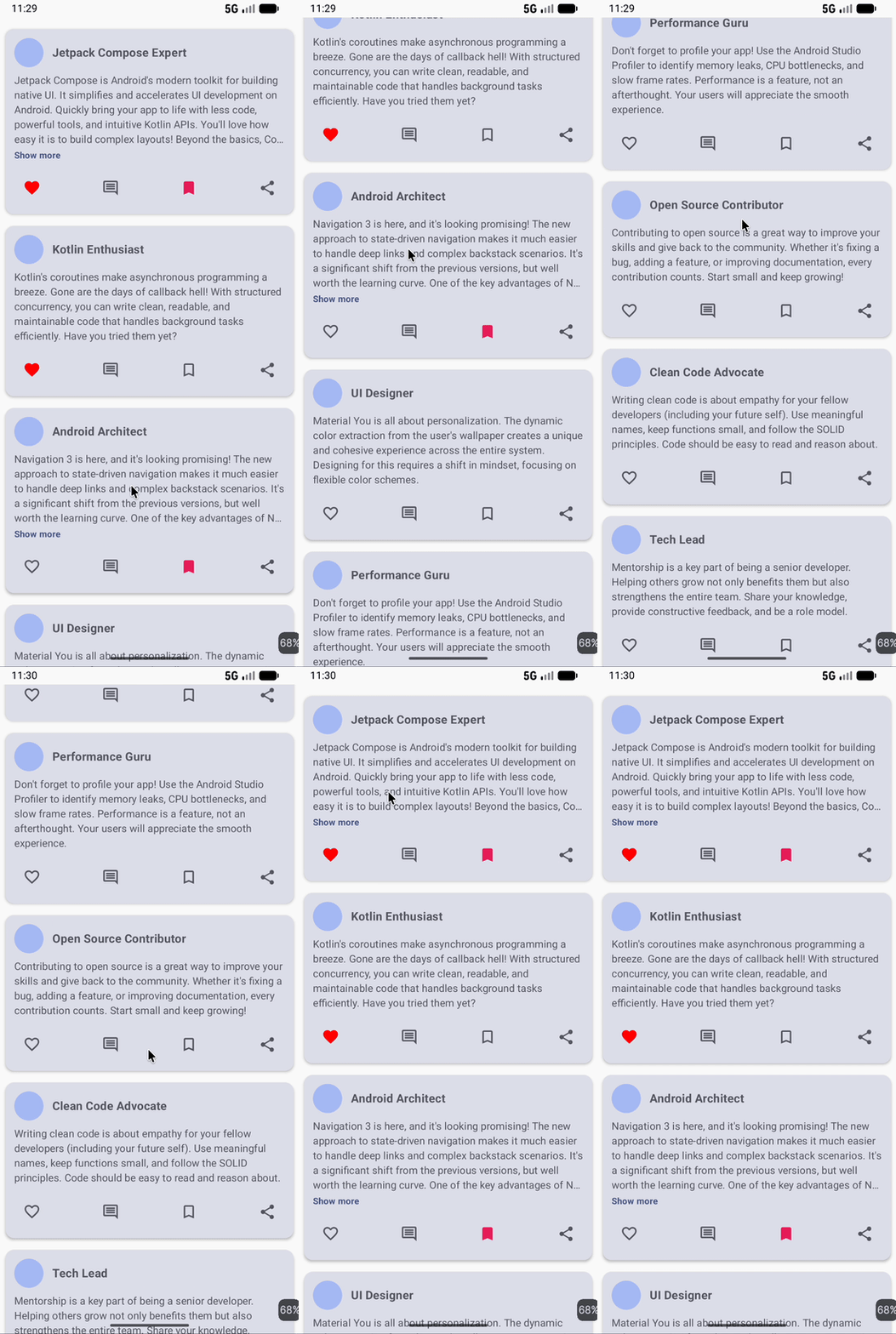
For a demo-sized feed, this works.
Why one feed ViewModel isn’t enough
A real feed is rarely a list of one item type. It will typically carry Post, AdItem, SuggestedUserCarousel, maybe a PollPost. Each has its own data sources, its own interactions, its own failure modes, and its own telemetry. An AdItem needs impression tracking and clickthrough reporting. A PollPost needs vote submission with rollback.
Put all of that in HomeViewModel and it becomes the union of every child type’s logic. Every new row type adds methods, state fields, and a bug surface that can break unrelated rows. A bookmark rollback failing on a Post should have no way to reach into a PollPost three rows down.
A cleaner model is one ViewModel per item type, scoped per item instance. PostViewModel owns post behavior. PollViewModel owns polls. AdViewModel owns impression logic. HomeViewModel goes back to sourcing the list and telling the UI what to render.
In the sample I’m keeping things simple: only one item type, and
PostViewModelis a straight 1:1 map fromPosttoPostItemUiState. In real code the per item VM is where you would compute the UIState, perform actions, etc. The simplification here keeps the focus on the scoping mechanics.
A Quick Primer on viewModel()
If you already know how
viewModel()resolves its instance and what aViewModelStoreOwneris, you can skip this section.
A ViewModelStore is a map from key to ViewModel. A ViewModelStoreOwner is anything that holds one such map: an Activity, a Fragment, a Nav3 NavEntry. When you call viewModel() in a composable, it reads LocalViewModelStoreOwner.current, asks that owner’s store for a ViewModel of the requested type, and returns the existing instance or creates a new one via the factory. When the owner is destroyed, the store clears, calling onCleared() on every ViewModel inside.
In a Nav3 app with rememberViewModelStoreNavEntryDecorator() installed, LocalViewModelStoreOwner.current inside an entry resolves to a ViewModelStoreOwner created for that entry. Pop the entry, its store clears, its VMs clear with it. This is the per screen ViewModel guarantee we are all used to.
The official ViewModel docs cover the lifecycle guarantees in more detail. What matters here: the owner that viewModel() sees is the one installed by the nearest LocalViewModelStoreOwner, and everything in its store shares that owner’s lifetime.
The common first pass: viewModel() in the row
A reasonable first move is to push viewModel() down into the row composable:
1
2
3
4
5
@Composable
fun PostItem(post: Post) {
    val viewModel: PostViewModel = viewModel(factory = PostViewModel.Factory(post))
    /* ... */
}
This does not do what it looks like it does.
viewModel() resolves against LocalViewModelStoreOwner.current, which inside a LazyColumn row is still the nav entry’s owner. Without a key, the store keys the VM by class. Every row asks for “the PostViewModel in this store,” and the store has exactly one. The factory runs for the first row that composes, and every row after that gets the same instance back, still holding the post that seeded the first call. Twelve rows, one PostViewModel.
Adding a key fixes the multiplicity:
1
2
3
4
val vm: PostViewModel = viewModel(
    key = post.id.toString(),
    factory = PostViewModel.Factory(post),
)
Now each row gets its own instance. But those instances still live in the nav entry’s store, which only clears when the screen is popped. Scroll the list once end to end and you’ve accumulated a VM per post you’ve ever looked at, with no way to evict any single one. This may be fine for your use case, but for heavier VMs it can cause memory issues (your mileage may vary).
What we actually need is each row to have its own store, with the row’s lifecycle determining when it’s cleared.
Scoping with rememberViewModelStoreOwner()
rememberViewModelStoreOwner() is new in Lifecycle 2.11. It returns a ViewModelStoreOwner scoped to the call site. The owner is created when the composable enters composition and is cleared, alongside every ViewModel it holds, when the composable leaves.
The parent it links to is the nearest LocalViewModelStoreOwner in the composition. In a Nav3 app that’s the nav entry’s owner, so configuration changes (rotation) are handled correctly: child VMs survive rotation if the parent does, and are destroyed when the parent is destroyed.
The child owner inherits the parent’s SavedStateRegistryOwner, default ViewModelProvider.Factory, and CreationExtras. So SavedStateHandle, Hilt injection, and application level defaults keep working with no additional wiring.
Here’s how it slots into HomeScreen:
1
2
3
4
5
6
7
8
9
10
11
12
13
@Composable
fun HomeScreen(viewModel: HomeViewModel = viewModel()) {
    val posts by viewModel.posts.collectAsState()

    LazyColumn {
        items(posts, key = { it.id }) { post ->
            val storeOwner = rememberViewModelStoreOwner()
            CompositionLocalProvider(LocalViewModelStoreOwner provides storeOwner) {
                PostItem(post = post)
            }
        }
    }
}
Two things happen here:
- For each row,
rememberViewModelStoreOwner()mints an owner scoped to that row’s call site. - We swap
LocalViewModelStoreOwnerto that owner for the row’s content.PostItem’s unchangedviewModel()call now resolves against the row’s own store.
Here we have PostViewModel log on init and clear so we can watch the scoping behavior from the outside:
1
2
3
4
5
6
7
8
class PostViewModel(
    private val post: Post,
    private val savedStateHandle: SavedStateHandle,
) : ViewModel() {
    init { Log.i("Saurabh", "Post init: ${post.authorName}") }
    override fun onCleared() { Log.i("Saurabh", "Post Cleared: ${post.authorName}") }
    /* state, toggles, expand */
}
Watch the logs as we scroll: each row’s VM initializes when it enters composition and clears when it scrolls past.
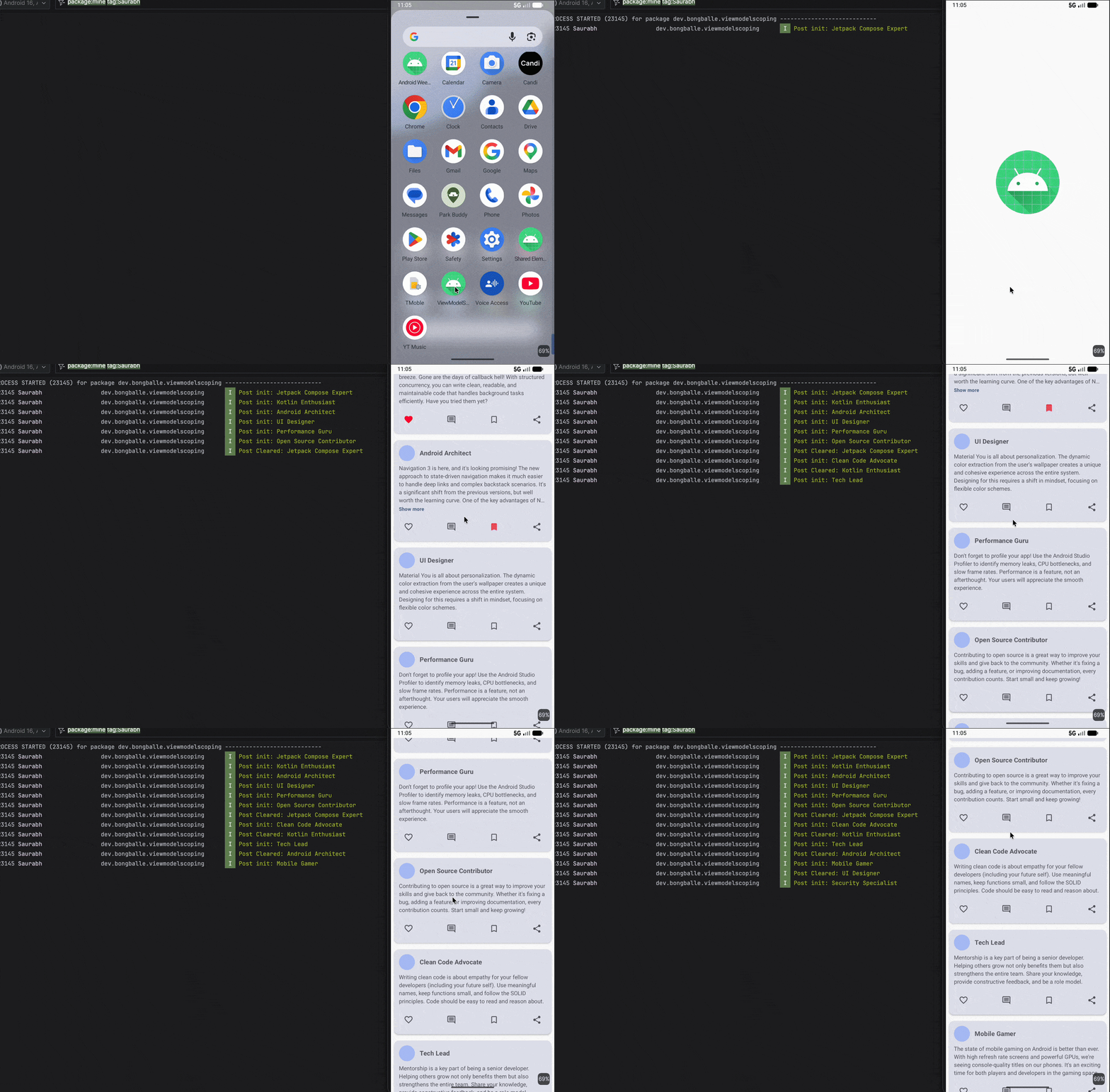
Each row has an independent ViewModel. viewModelScope for launching coroutines is also now scoped per the lifecycle of the row. If you have polling logic in the VM, it automatically cancels when the row is disposed.
The parent LocalViewModelStoreOwner that the row’s owner links to can be anything: an Activity, a Fragment, a Nav3 nav entry. In a Nav3 app, rememberViewModelStoreNavEntryDecorator() installs a per entry owner, so every row’s owner gets cleared when that entry is popped. Nothing leaks across navigation.
Restoring ViewModel state
With the scoping in place, we can move the Show more state out of the composable and into the VM, where the rest of the row’s state already lives:
1
2
3
4
5
6
7
8
class PostViewModel(private val post: Post, /* ... */) : ViewModel() {
    private val _state = MutableStateFlow(
        PostItemUiState(/* ..., */ isExpanded = false)
    )
    val state: StateFlow<PostItemUiState> = _state.asStateFlow()

    fun expand() { _state.update { it.copy(isExpanded = true) } }
}
The composable reads state.isExpanded and calls viewModel::expand on tap, replacing the local remember { mutableStateOf(false) }.
This looks like a tidy consolidation, but it doesn’t survive scroll-off. Expand a row, scroll it off-screen, scroll back, and it’s collapsed again.
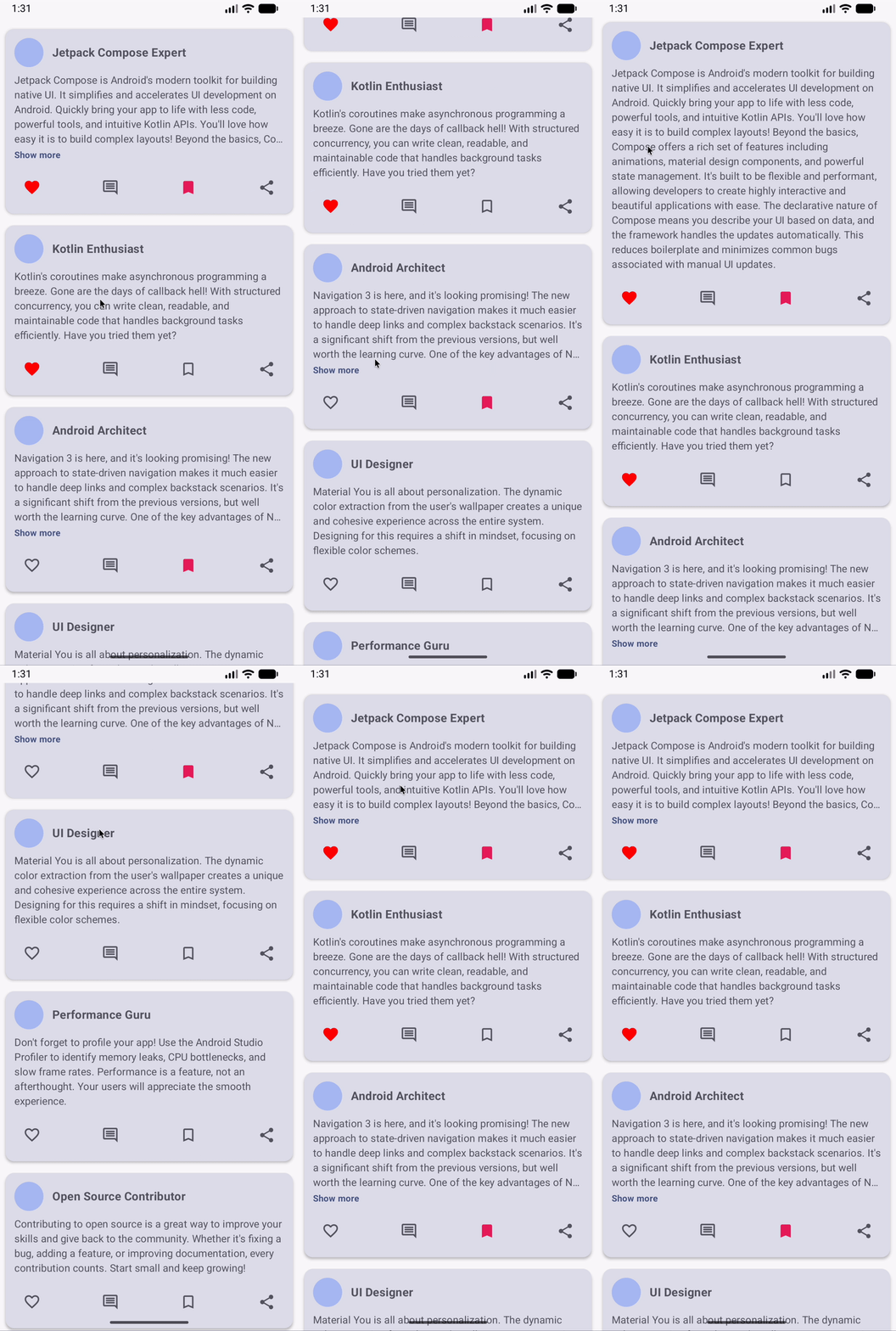
The behavior matches the raw remember { mutableStateOf } version, since that version wasn’t rememberSaveable either. The difference is that the ViewModel was supposed to be the durable state holder for the row, and it isn’t durable enough. Scroll the row off, the row leaves composition, the row’s owner is cleared and the VM is gone. When the row scrolls back, a fresh owner mints a fresh VM with isExpanded = false.
The VM alone can’t fix this. The VM is the thing being thrown away. The answer is to persist isExpanded outside the VM’s lifetime, in a store that lives longer than the row’s visit to the viewport but is still scoped to that row. SavedStateHandle, backed by a per item SaveableStateHolder slot, is exactly that.
SavedStateHandle is a key-value bundle scoped to a ViewModel. Reads and writes flow through the underlying SavedStateRegistry, which means the values survive process death too. Its lifetime is tied to the nearest SavedStateRegistryOwner, which for our scoped child owner is inherited from the parent (the nav entry).
We pull one in via CreationExtras.createSavedStateHandle() in the factory, which works because the new scoped owner propagates the parent’s CreationExtras:
1
2
3
4
5
6
7
8
9
10
11
12
13
14
15
16
17
18
19
20
21
22
23
24
class PostViewModel(
    private val post: Post,
    private val savedStateHandle: SavedStateHandle,
) : ViewModel() {

    companion object {
        fun Factory(post: Post) = viewModelFactory {
            initializer { PostViewModel(post, createSavedStateHandle()) }
        }
    }

    private val _state = MutableStateFlow(
        PostItemUiState(
            /* ..., */
            isExpanded = savedStateHandle["isExpanded"] ?: false,
        )
    )
    val state: StateFlow<PostItemUiState> = _state.asStateFlow()

    fun expand() {
        _state.update { it.copy(isExpanded = true) }
        savedStateHandle["isExpanded"] = true
    }
}
On its own, this isn’t enough. All twelve rows’ SavedStateHandles resolve against the same parent SavedStateRegistry (the nav entry’s). If every row writes to the key "isExpanded", they overwrite each other. Row 1 expanding would flip every row’s isExpanded the next time it composed.
SaveableStateHolder.SaveableStateProvider(key) fixes this. It installs a nested saved state slice keyed by whatever you hand it, so anything saveable inside (including a child SavedStateRegistry, and therefore our SavedStateHandle) gets its own bucket. Pair it with the scoped ViewModelStoreOwner:
1
2
3
4
5
6
7
8
9
10
11
12
13
14
15
16
@Composable
fun HomeScreen(viewModel: HomeViewModel = viewModel()) {
    val saveableStateHolder = rememberSaveableStateHolder()
    val posts by viewModel.posts.collectAsState()

    LazyColumn {
        items(posts, key = { it.id }) { post ->
            saveableStateHolder.SaveableStateProvider(post.id) {
                val storeOwner = rememberViewModelStoreOwner()
                CompositionLocalProvider(LocalViewModelStoreOwner provides storeOwner) {
                    PostItem(post = post)
                }
            }
        }
    }
}
The
SaveableStateProvidersnapshot for each scrolled off row stays in memory until the holder itself is disposed (typically when the screen leaves composition). Also, anything saved here gets serialized every time the row leaves and deserialized when the row re-enters the viewport.
The flow is now:
- Row 1 expands.
PostViewModelwritesisExpanded = trueto itsSavedStateHandle. - Row 1 scrolls off. The
SaveableStateProviderleaves composition and snapshots everything saveable inside it (including theSavedStateRegistrybacking ourSavedStateHandle) into its per-key bucket. The row’sViewModelStoreOwneris also cleared andPostViewModel.onCleared()runs. The snapshot outlives the VM. - Row 1 scrolls back.
SaveableStateProvider(post.id)restores the bucket. A freshViewModelStoreOwneris minted, a freshPostViewModelis created, and its newSavedStateHandlereads from the restored slice.isExpandedcomes back astrue, and row 1 renders expanded.
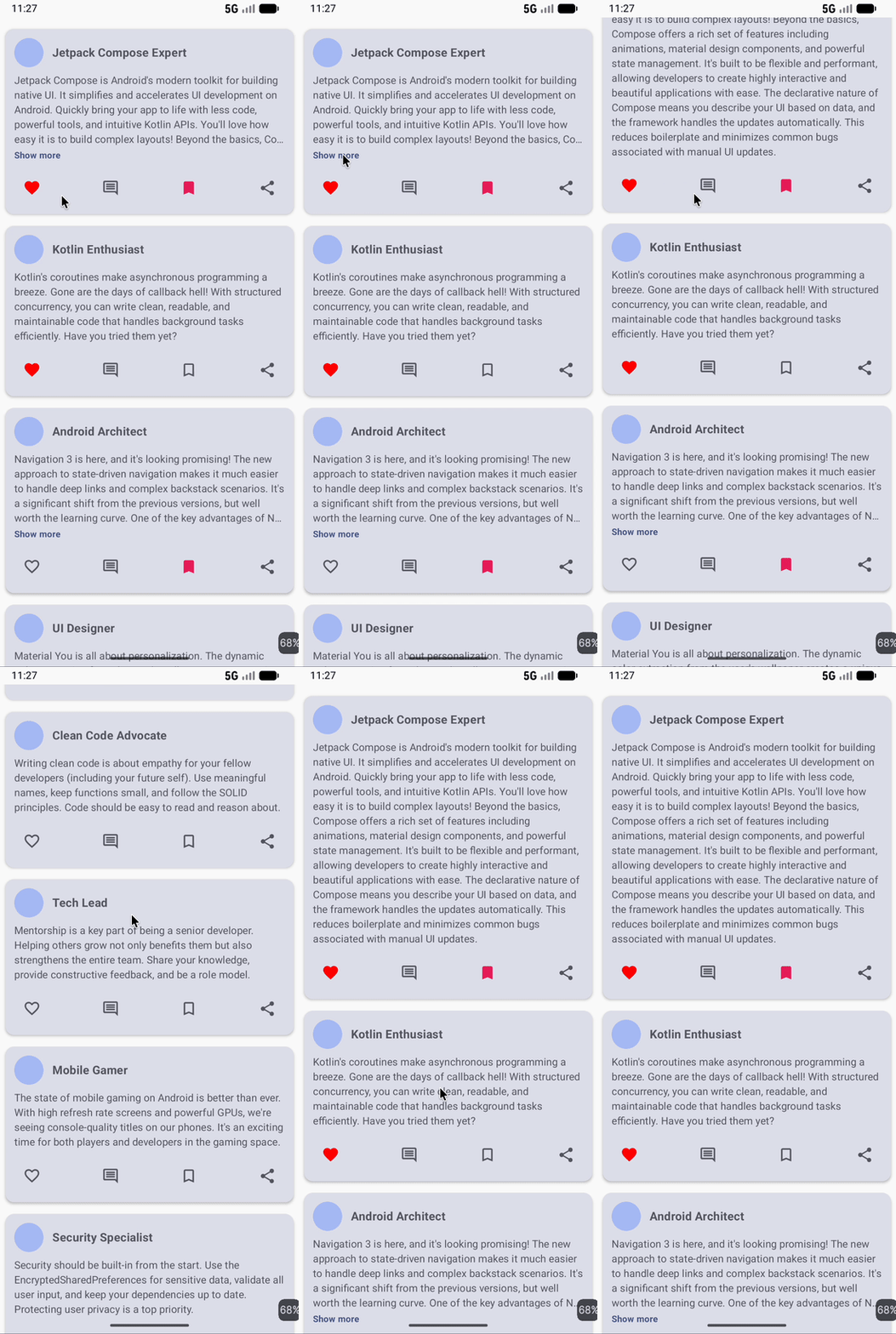
Process death survival comes for free. The nav entry’s SavedStateRegistry is persisted by Nav3, and the per-item slices go with it.
What if we don’t want to scope VM to lazy item’s lifecycle
Per-row scoping works for a feed because we want the row’s VM gone when the row leaves the viewport. We accepted the consequence (state resets on scroll-off) and recovered the data we cared about with SavedStateHandle.
Tabs flip the requirement. When a user swipes across tabs, we usually want the tab state (i.e. the ViewModel) to be maintained when they come back to it. rememberViewModelStoreOwner() alone can’t give us that, as it scopes the VM to the call site of the composable.
This is where the second new API comes in.
The Tabs Example
Imagine a screen with three tabs: a feed, a search tab, and a profile tab. Each tab has its own ViewModel.
Following the per-row pattern, each page mints its own ViewModelStoreOwner via rememberViewModelStoreOwner():
1
2
3
4
5
6
7
8
9
10
11
12
13
14
15
16
17
18
19
20
21
22
23
24
25
26
27
28
29
30
31
@Composable
fun TabsScreen() {
  val pagerState = rememberPagerState(pageCount = { 3 })

  Column {
    PrimaryTabRow(/* ... */)

    HorizontalPager(state = pagerState) { page ->
      val storeOwner = rememberViewModelStoreOwner()
      CompositionLocalProvider(LocalViewModelStoreOwner provides storeOwner) {
        when (page) {
          0 -> FeedTab()
          1 -> SearchTab()
          2 -> ProfileTab()
        }
      }
    }
  }
}

@Composable
fun SearchTab(viewModel: SearchViewModel = viewModel()) {
  ...
}

class SearchViewModel : ViewModel() {
  val query: StateFlow<String>
  val results: StateFlow<SearchUiState>

  fun onQueryChange(value: String)
}
Tab state resets on swipe
When the user types a query in the search tab and swipes to another tab, the search tab can leave composition once we’re outside its beyondViewportPageCount window. With rememberViewModelStoreOwner(), the search tab’s owner is cleared when the tab leaves composition, and the SearchViewModel is gone with it. Coming back composes a new owner with a fresh SearchViewModel, so the query the user typed and the results they were looking at are both gone.
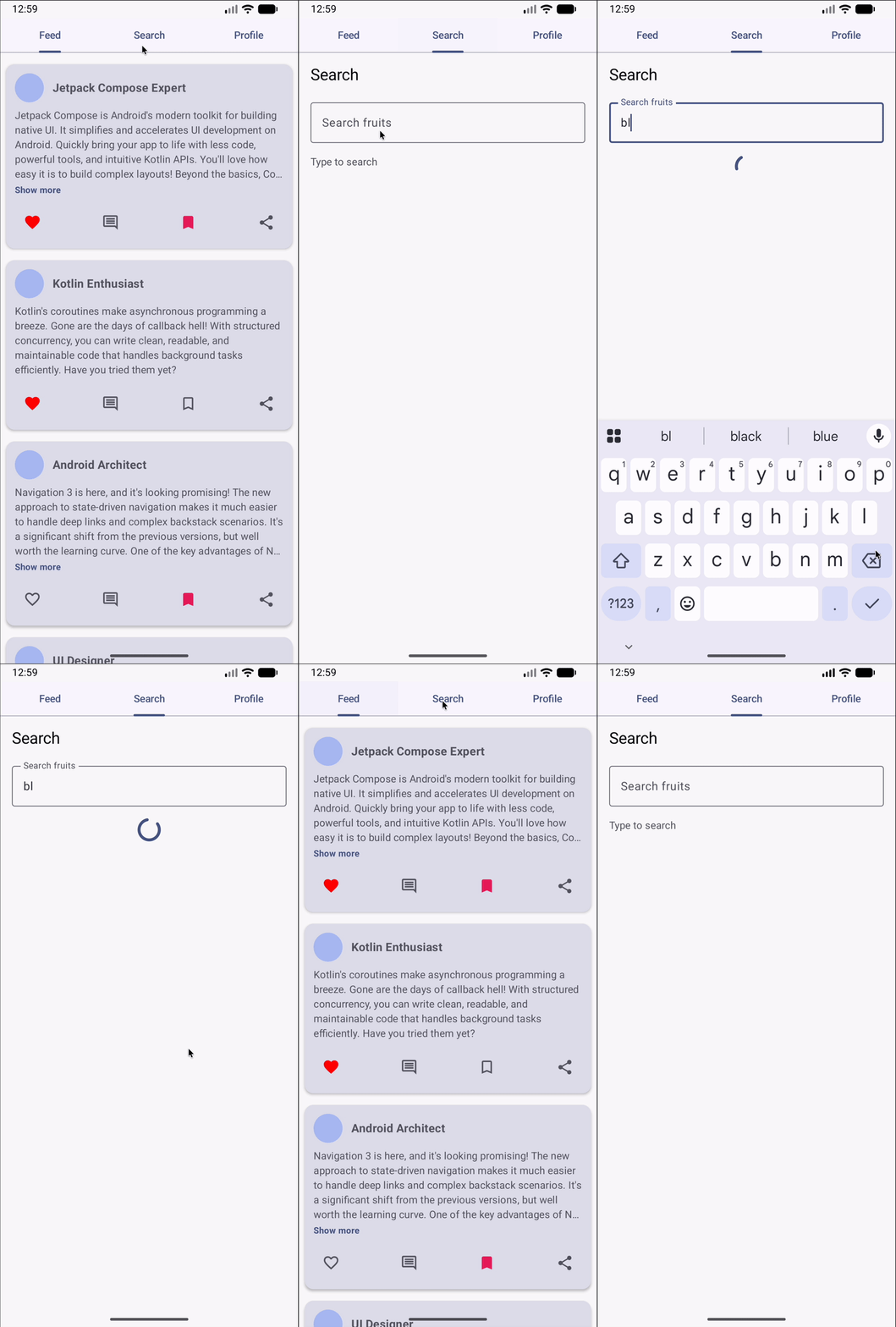
We could use SavedStateHandle to persist the user’s query, but the user would come back to a saved query that immediately redoes the search, reloading the search results (not what we want).
Hoisting with ViewModelStoreProvider
ViewModelStoreProvider manages a set of ViewModelStore instances scoped to a parent ViewModelStore. We create one via rememberViewModelStoreProvider(), which links the provider to the nearest parent ViewModelStoreOwner in the composition. The provider’s lifecycle is automatically managed: it is created once and disposed when the composable that calls rememberViewModelStoreProvider() leaves composition.
We hoist the provider above the pager (we want the page ViewModels tied to the lifecycle of the pager, not the individual pages), then ask it for a child owner per page:
1
2
3
4
5
6
7
8
9
10
11
12
13
14
15
16
17
18
19
20
@Composable
fun TabsScreen() {
    val pagerState = rememberPagerState(pageCount = { 3 })
    val storeProvider = rememberViewModelStoreProvider()

    Column {
        PrimaryTabRow(/* ... */)

        HorizontalPager(state = pagerState) { page ->
            val storeOwner = rememberViewModelStoreOwner(provider = storeProvider, key = page)
            CompositionLocalProvider(LocalViewModelStoreOwner provides storeOwner) {
                when (page) {
                    0 -> FeedTab()
                    1 -> SearchTab()
                    2 -> ProfileTab()
                }
            }
        }
    }
}
Now when the search tab leaves composition, its content disposes, but the underlying ViewModelStore is still held by the provider. When the user swipes back, rememberViewModelStoreOwner(provider = storeProvider, key = page) returns the same owner, and viewModel() resolves the same SearchViewModel. The query and the results are still there.
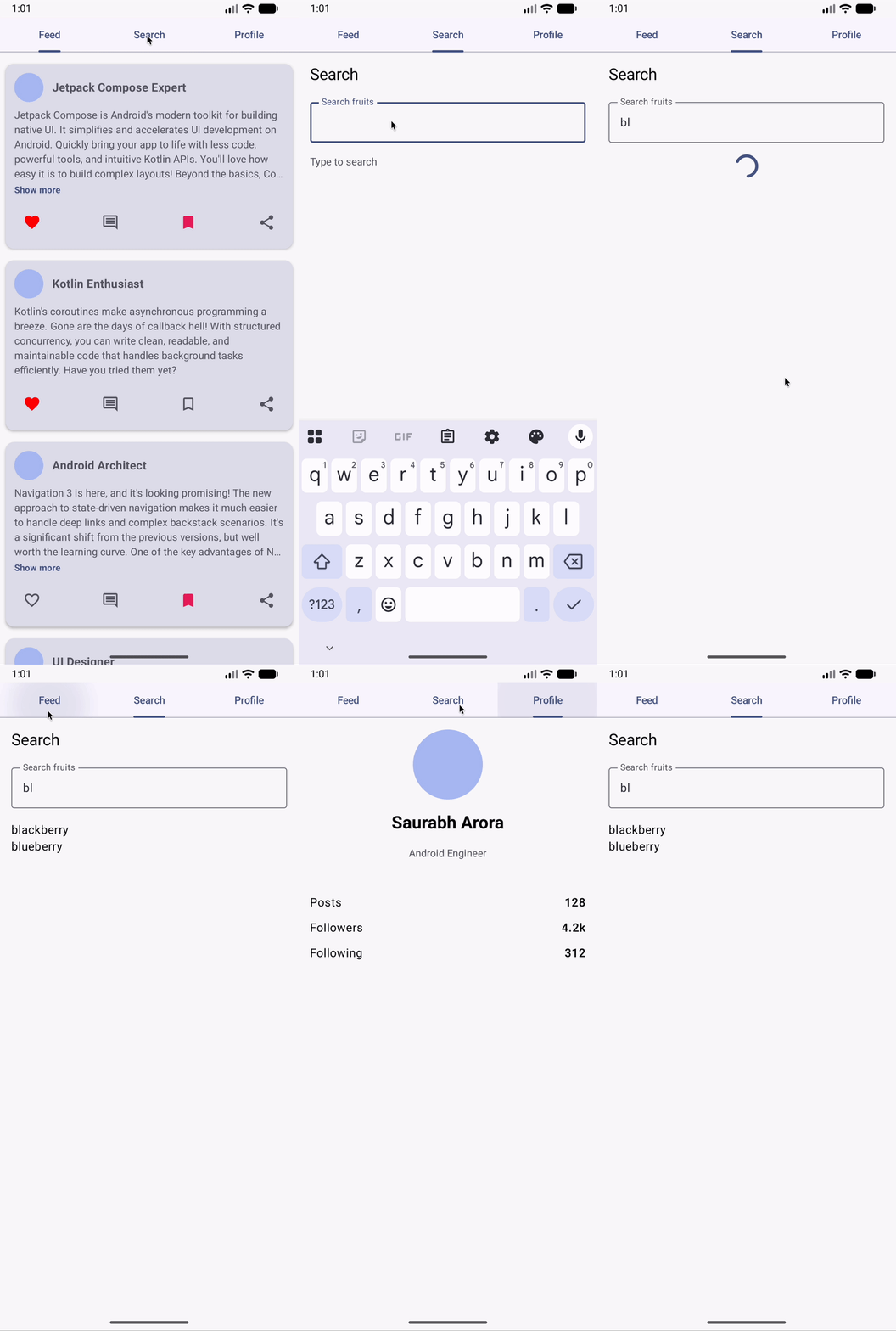
When the screen itself leaves composition, the provider is disposed, every store it held is cleared, and every ViewModel.onCleared() runs.
TL;DR
For UI elements where the VM should die with the composable, use rememberViewModelStoreOwner(). The owner is cleared when the composable leaves composition. Pair with a per-item SaveableStateHolder.SaveableStateProvider if you have state that should survive viewmodel or process death.
For UI elements where the VM should outlive the composable, hoist a rememberViewModelStoreProvider() and use rememberViewModelStoreOwner(provider, key). Each child VM lives as long as the provider does, and the provider dies with whatever composable created it.
The two examples in this post (a LazyColumn feed and a tabbed pager) demonstrate each shape, but the same techniques apply to dialogs, bottom sheets, or any UI section that needs its own VM lifetime.
If you’re making architecture calls you’ll live with for years, I do 1:1 consults on Compose and KMP. Book a session →
Thanks to Marcello Galhardo for the review. Read his explanation about the API’s over at Scoping ViewModels in Compose